
Fan
Unknown Artist
1860–79
Medium
tortoiseshell, paper, mother-of-pearl, metal, silk
Classification
Fan
Culture
European
Department
Costume Institute
Museum
Metropolitan Museum of Art, New York, NY
Credit
Brooklyn Museum Costume Collection at The Metropolitan Museum of Art, Gift of the Brooklyn Museum, 2009; Gift of Sarah Bergen Pierce, 1944
Accession Number
2009.300.1780
Rights
Public Domain
Tags
Art Historical Context
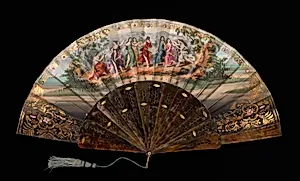
This exquisite fan, crafted between 1860 and 1879 by an unknown European artist, exemplifies the opulent accessories of the Victorian era. Made from tortoiseshell for its lightweight, translucent frame, adorned with shimmering mother-of-pearl inlays, delicate paper, metal fittings, and silk accents, it represents the height of 19th-century luxury handcraft. Tortoiseshell, harvested from hawksbill sea turtles, was prized for durability and warm glow, while mother-of-pearl added a pearlescent elegance often seen in high-society items. These materials highlight the fan's status as a fashionable essential for affluent women attending balls and social gatherings. The fan's paper leaf features a lively scene of women dancing, capturing the grace and energy of Victorian leisure pursuits like the waltz and quadrille. Such imagery not only served as decoration but also evoked the romance of courtship rituals, where fans doubled as subtle communication tools—fluttered to flirt, snapped to refuse. This blend of artistry and functionality underscores the era's intricate social codes. Housed in The Metropolitan Museum of Art's Costume Institute, this fan offers a glimpse into European women's daily elegance and the craftsmanship of a bygone age, reminding us how everyday objects carried profound cultural weight.