
Fan
Unknown Artist
third quarter 18th century
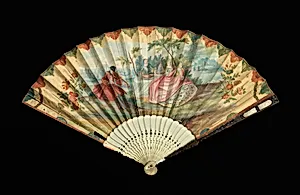
Medium
ivory, mother-of-pearl, parchment, gouache, tortoiseshell, metal
Classification
Fan
Culture
probably Chinese
Department
Costume Institute
Museum
Metropolitan Museum of Art, New York, NY
Credit
Brooklyn Museum Costume Collection at The Metropolitan Museum of Art, Gift of the Brooklyn Museum, 2009; Museum Collection Fund and the Dick S. Ramsay Fund, 1952
Accession Number
2009.300.1850
Rights
Public Domain
Tags
Art Historical Context
This exquisite fan, crafted in the third quarter of the 18 century, exemplifies the opulent artistry of Qing Dynasty China. Made from a luxurious array of materials—ivory, mother-of-l, parchment painted with gouache, tortoiseshell, and metal—it served as both a practical accessory and a status symbol for men and women. The delicate gouache scenes, likely depicting elegant figures amid blooming flowers as suggested by its motifs, highlight the meticulous techniques of Chinese fan-making, where every layer of inlay and pigment contributed to a shimmering, multifaceted beauty. In 18th-century Chinese society, fans were indispensable for cooling, gesturing, and flirting during social gatherings, court ceremonies, or scholarly pursuits. This piece, from the Costume Institute's collection, reflects the era's fusion of functionality and refinement, with its rigid structure (possibly a palm-leaf style) adorned to captivate. The use of exotic materials like mother-of-pearl and tortoiseshell underscores the object's elite appeal, possibly intended for export or high-society use. Today, preserved through the Brooklyn Museum's gift to The Met, this fan offers a window into everyday luxury, reminding us how personal adornments carried profound cultural weight in imperial China.