
Fan
Unknown Artist
1840–70
Medium
mother-of-pearl, paper, gouache, metal
Classification
Fan
Culture
probably French
Department
Costume Institute
Museum
Metropolitan Museum of Art, New York, NY
Credit
Brooklyn Museum Costume Collection at The Metropolitan Museum of Art, Gift of the Brooklyn Museum, 2009; Brooklyn Museum Collection
Accession Number
2009.300.2264
Rights
Public Domain
Tags
Art Historical Context
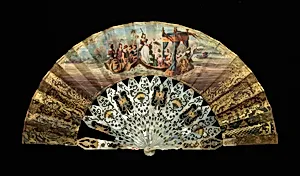
This exquisite fan, dating from 1840–70 and likely of French origin, exemplifies the opulent accessory culture of the mid-19th century.ed from shimmering mother-of-pearl the guards, delicate paper leaf painted with gouache—an opaque watercolor technique prized for its vibrant, matte finish—and accented with metal elements, it reflects the era's blend of luxury materials and fine craftsmanship. Fans like this were essential in fashionable wardrobes, serving not just for cooling in stuffy salons but as subtle tools for social signaling, flirtation, and conversation. The artwork's painted scene, evoking men, women, and boats, captures a leisurely riverside or seaside idyll popular in Romantic-era imagery, where such motifs symbolized romance, travel, and bourgeois leisure. In France during the July Monarchy and Second Empire, fans were status symbols, often hand-painted by skilled artisans for elite clientele. Housed in the Costume Institute at The Metropolitan Museum of Art, this piece from the Brooklyn Museum collection highlights how everyday objects embodied cultural aspirations, bridging fashion, art, and etiquette in Victorian society.