
Fan
Unknown Artist
1860–69
Medium
Mother-of-pearl, paper, metal, metallic
Classification
Fan
Culture
European
Department
Costume Institute
Museum
Metropolitan Museum of Art, New York, NY
Credit
Brooklyn Museum Costume Collection at The Metropolitan Museum of Art, Gift of the Brooklyn Museum, 2009; Gift of George Arents in memory of Annie Walter Arents, 1949
Accession Number
2009.300.4582
Rights
Public Domain
Tags
Art Historical Context
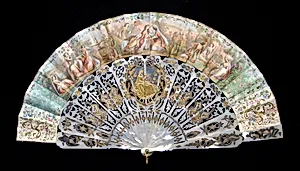
This exquisite fan, crafted in Europe between 1860 and 1869, exemplifies the opulent accessories of the Victorian era. Made from shimmering mother-of-pearl for the delicate sticks and mounts, layered with painted paper leaves, and accented by metal and metallic elements, it reflects the era's fascination with luxurious, tactile materials. Mother-of-pearl, sourced from seashells and prized for its iridescent glow, was a hallmark of high-end craftsmanship, signaling wealth and refinement among the fashionable elite. In the 19th century, fans were far more than functional tools for cooling or shielding from the sun—they served as social instruments. Women (and sometimes men) wielded them in a subtle "language of the fan," conveying flirtations or messages through graceful gestures. The floral motifs, hinted at in its design, evoke the Romantic period's love for nature-inspired decoration, blending beauty with symbolism of delicacy and transience. Housed in The Metropolitan Museum of Art's Costume Institute, this anonymous masterpiece from the Brooklyn Museum collection invites us to imagine bustling Parisian salons or London balls, where such fans fluttered amid whispers and dances. A testament to everyday elegance, it captures how personal adornments wove artistry into daily life.