
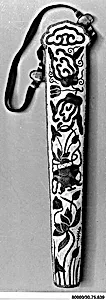
Fan Case with Citron, Tripod and Lotus
Unknown Artist
18th–19th century
Medium
Silk, metallic thread
Dimensions
Overall: 12 1/2 x 2 1/2 in. (31.8 x 6.4 cm)
Classification
Textiles-Embroidered
Culture & Period
China · Qing dynasty (1644–1911)
Department
Asian Art
Museum
Metropolitan Museum of Art, New York, NY
Credit
Bequest of William Christian Paul, 1929
Accession Number
30.75.839
Rights
Public Domain
Tags
Art Historical Context
This exquisite fan case, embroidered on silk with metallic threads, hails from China's Qing dynasty (16441911), a period renowned for its refined textile arts and imperial splendor. Dating to the 18th–19th century, this slender accessory—measuring just 12½ x 2½ inches—was designed to protect a gentleman's folding fan, a quintessential item for scholars and elites in daily life and social rituals. Housed in the Metropolitan Museum of Art's Art Department, it entered the collection through the 1929 bequest of William Christian Paul, preserving a glimpse of everyday luxury from imperial China. The artwork's motifs—a citron (Buddha's hand fruit), a tripod vessel, and blooming lotuses—carry deep cultural resonance. Lotuses symbolize purity and enlightenment, rising unsullied from muddy waters, while the citron evokes prosperity and longevity, and the tripod (or *ding*) nods to ancient ritual bronzes associated with harmony and authority. These auspicious symbols, rendered in meticulous embroidery, reflect the Qing era's blend of Daoist, Buddhist, and Confucian ideals, often adorning personal objects to invoke good fortune. Crafted with silk and shimmering metallic threads, the piece showcases advanced needlework techniques like satin stitch and couching, which created texture and luster. Such embroidered textiles were status symbols, produced by skilled artisans in workshops, highlighting the era's technical mastery and aesthetic elegance. A delicate treasure, it invites us to appreciate the artistry woven into China's refined material culture.