
Fan leaf
Unknown Artist
second half 19th century
Medium
Hair, bobbin lace
Dimensions
7 1/2 × 23 in. (19.1 × 58.4 cm)
Classification
Textiles-Laces
Culture
French, Chantilly
Department
European Sculpture and Decorative Arts
Museum
Metropolitan Museum of Art, New York, NY
Credit
Gift of Mr. B. F. Breslauer, 1958
Accession Number
58.6.1
Rights
Public Domain
Tags
Art Historical Context
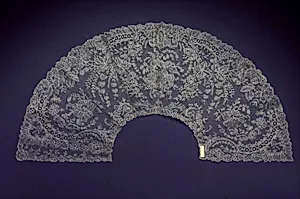
This exquisite fan leaf, crafted in the second half of the 19th, hails from Chantilly, France—a region renowned for its masterful bobbin lace traditions. Measuring 7½ × 23 inches, this delicate textile exemplifies the opulence of European decorative arts, designed as the unfolding "leaf" of a fashionable hand fan. Produced anonymously by skilled artisans, it features intricate floral and leaf motifs, capturing the Victorian era's love for nature-inspired elegance in personal accessories. What sets this piece apart is its unusual medium: human hair, meticulously worked into bobbin lace. Bobbin lacemaking involves twisting and intertwining threads held on small bobbins over a patterned pillow, creating a lightweight, translucent fabric prized for its durability and fine detail. Hair lace, though rare, was a 19th-century novelty, often evoking sentimentality or mourning jewelry traditions, where locks of hair symbolized enduring memory. Housed in the Metropolitan Museum of Art's European Sculpture and Decorative Arts department (gift of Mr. B. F. Breslauer, 1958), this fan leaf highlights Chantilly's legacy as a lace-making hub, blending technical virtuosity with cultural refinement. Visitors can appreciate how such items adorned the hands of 19th-century elites, fluttering with whispers of fashion and artistry.