
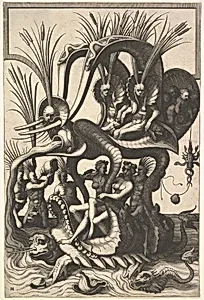
Fantastic Sea Carriage
Medium
Etching
Classification
Prints
Department
Drawings and Prints
Museum
Metropolitan Museum of Art, New York, NY
Credit
Harris Brisbane Dick Fund, 1953
Accession Number
53.600.6
Rights
Public Domain
Tags
Art Historical Context
Created in 1556, *Fantastic Sea Carriage* is an etching that showcases the inventive spirit of Northern Renaissance design Cornelis Floris II a Flemish architect and celebrated for his mannerist, supplied the original concept, while the skilled printmakers Johannes and Lucas van Doetecum translated it into this intricate etching. The medium allowed Floris’s elaborate vision—likely a mythological procession of sea deities and female nudes—to reach a wide audience through reproducible prints. Etchings like this one played an important role in disseminating fantastic and grotesque imagery across Europe during the mid-sixteenth century. Floris’s designs blended classical mythology with imaginative, almost theatrical elements, reflecting the period’s fascination with and the natural world. The presence of female nudes suggests a subject tied to marine gods or allegorical triumphs, popular themes in courtly and scholarly circles. Today housed in the Metropolitan Museum of Art’s collection of prints and drawings, the work exemplifies how artists of the time used printmaking to explore whimsical yet sophisticated ideas. Its acquisition through the Harris Brisbane Dick Fund in 1953 underscores its enduring appeal as both a technical achievement and a window into Renaissance fantasy.