
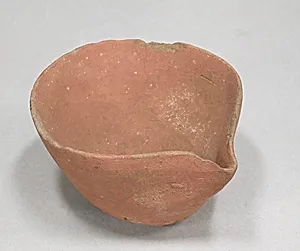
Feeding cup for infant
Unknown Artist
ca. 1950–1850 B.C.
Medium
Pottery
Dimensions
h. 5 cm (1 15/16 in); diam. 7.8 cm (3 1/16 in)
Classification
Cup, feeding
Period
Middle Kingdom
Department
Egyptian Art
Museum
Metropolitan Museum of Art, New York, NY
Credit
Rogers Fund, 1909
Accession Number
09.180.768c
Rights
Public Domain
Art Historical Context
This delicate pottery feeding cup, dating to the early to mid-12th Dynasty of Egypt Middle Kingdom (ca.1950–1850 B.C.), offers a touching glimpse into ancient family life. Standing just 5 cm tall with a diameter of 78 cm, its small size was perfectly suited for infants, likely used to dispense milk, gruel, or other nourishing liquids. Crafted from everyday pottery—a staple medium in ancient Egypt—this utilitarian object highlights the practical artistry of the period, where potters employed wheel-throwing or coiling techniques to create functional vessels that were both durable and accessible. The Middle Kingdom marked a renaissance in Egyptian culture following centuries of division, with renewed focus on stability, prosperity, and daily rituals. Such feeding cups underscore the society's emphasis on child-rearing and maternal care, reflecting values of family continuity in a world where high infant mortality made every tool for nurturing precious. Though produced by an unknown artisan, its simple form exemplifies the unadorned yet elegant pottery style of the era, prioritizing utility over decoration. Acquired through the Rogers Fund in 1909 and now housed in the Metropolitan Museum of Art's Egyptian Art department, this modest artifact bridges the gap between royal monuments and ordinary lives, reminding us of the human stories behind ancient history.