
Feline figure
500 BCE–500 CE
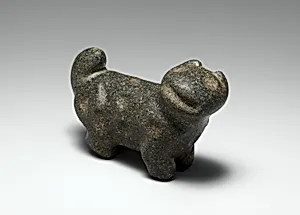
Medium
Stone
Dimensions
H. 3 5/8 × W. 5 1/2 × D. 2 1/4 in. (9.2 × 14 × 5.7 cm)
Classification
Stone-Sculpture
Culture
Condorhuasi
Department
Arts of Africa, Oceania, and the Americas
Museum
Metropolitan Museum of Art, New York, NY
Credit
Gift of Claudia Quentin, 2016
Accession Number
2016.734.8
Rights
Public Domain
Tags
Art Historical Context
This enchanting stone feline figure, crafted by Condorhuasi artists between 500 BCE and 500 CE, hails from the ancient culture of northwest Argentina's Calquí Valleys. just 3⅝ × 5½ × 2¼ inches, this compact sculpture captures the essence of a powerful cat—likely a puma or jaguar—in stylized form typical of pre-Columbian Andean traditions. Displayed in the Metropolitan Museum of Art's Department of Arts of Africa, Oceania, the Americas, it exemplifies the Condorhuasi people's mastery of monolithic stone carving. Felines held profound cultural significance in Andean societies, symbolizing strength, ferocity, and spiritual guardianship. These sculptures, often produced in hard stones like basalt or andesite, were likely used in rituals, as amulets, or as offerings to deities associated with the natural world. The Condorhuasi style features bold, abstracted forms with minimal detailing, emphasizing the animal's dynamic posture and mythical presence over realism, reflecting a worldview where animals bridged the earthly and supernatural realms. Today, this rare survivor—gifted to the Met in 2016—offers a window into a little-known civilization predating the Inca by centuries. Its portability suggests it was cherished by shamans or elites, inviting us to ponder the ancient reverence for cats as emblems of the wild highlands.