
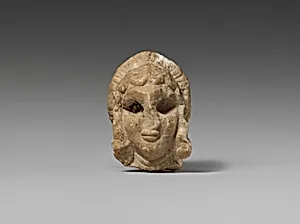
Female head with elaborate hairstyle
Unknown Artist
ca. 2600–2500 BCE
Medium
Gypsum alabaster
Dimensions
H. 1 1/2 in. (3.8 cm)
Classification
Stone-Sculpture
Period
Early Dynastic IIIa
Department
Ancient Near Eastern Art
Museum
Metropolitan Museum of Art, New York, NY
Credit
Rogers Fund and Gifts of Lucy W. Drexel, Theodore M. Davis, Helen Miller Gould, Albert Gallatin, Egypt Exploration Fund and Egyptian Research Account, by exchange, 1950
Accession Number
51.25.2
Rights
Public Domain
Tags
Art Historical Context
This delicate gypsum alabaster sculpture, titledFemale Head with Elaborate Hairstyle*, dates to the Early Dynastica period (ca. 2600–2500 BCE) in ancient Mesopotamia, likely from Sumerian city-states like Ur. Standing just 1 1/2 inches (3.8 cm) tall, it exemplifies the exquisite stone carving of the Ancient Near East, where artisans skillfully worked soft alabaster to capture intricate details. The elaborate coiffure—featuring layered curls and braids—hints at the status and beauty ideals of elite women or deities, common in votive figures offered to temples. Gypsum alabaster's translucency and workability allowed for fine modeling of facial features and hair, often paired with inlaid eyes of shell and lapis lazuli in larger statues (though missing here). These small heads, possibly from fragmented figures, reflect Sumerian piety: worshippers dedicated them to gods for protection and prosperity. Discovered through early 20th-century excavations, this piece entered the Metropolitan Museum of Art in 1950 via prestigious gifts, preserving a glimpse into a formative era of urban civilization, writing, and monumental art.