
Ferret
Unknown Artist
7th century (?)
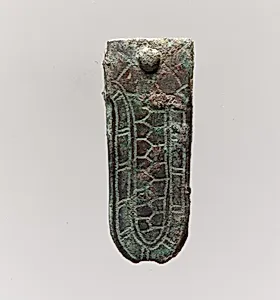
Medium
Copper alloy
Dimensions
Overall: 1 11/16 x 11/16 x 3/16 in. (4.3 x 1.7 x 0.5 cm)
Classification
Metalwork-Copper alloy
Culture
Frankish
Department
Medieval Art
Museum
Metropolitan Museum of Art, New York, NY
Credit
Gift of J. Pierpont Morgan, 1917
Accession Number
17.191.272
Rights
Public Domain
Art Historical Context
Nestled in the Metropolitan Museum of Art's Medieval collection, this charming copper alloy figurine titled *Ferret* captures the lively form of the small mammal in exquisite miniature detail. Measuring just 1 11/ x 11/16 x 3/16 inches (4.3 x 1.7 0.5 cm), it exemplifies the precision of early medieval craftsmanship. Likely cast using lost-wax techniques common in period, the alloy's warm patina highlights the ferret's sleek body, alert posture, and textured fur, inviting viewers to marvel at its portability—perfect for personal adornment or as a talisman. Dating tentatively to the 7th century, this piece hails from Frankish culture during the Merovingian dynasty, a time when the Franks dominated much of western Europe after the fall of Rome. Animal motifs like this ferret were popular in Frankish metalwork, possibly symbolizing cunning, hunting prowess, or everyday wildlife, bridging pagan traditions and emerging Christian influences. Such small-scale sculptures reflect the era's advanced metallurgy, where copper alloys offered durability and affordability for both elite and everyday objects. A generous gift from J. Pierpont Morgan in 1917, *Ferret* offers a window into the tactile artistry of early medieval life, reminding us how even tiny artifacts can evoke a vibrant, animal-filled world long past.