
Ferret
Unknown Artist
6th–7th century
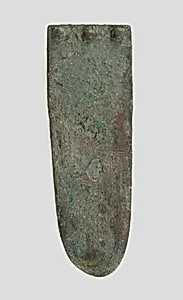
Medium
Copper alloy
Dimensions
Overall: 3 11/16 x 1 1/4 x 1/4 in. (9.4 x 3.1 x 0.7 cm)
Classification
Metalwork-Bronze
Culture
Late Roman
Department
Medieval Art
Museum
Metropolitan Museum of Art, New York, NY
Credit
Gift of J. Pierpont Morgan, 1917
Accession Number
17.193.237
Rights
Public Domain
Art Historical Context
Nestled in the Metropolitan Museum of Art's Medieval collection, this charming copper alloy figurine titled *Ferret* captures a lively creature from the Late Roman world of the 6th–7th century. Measuring just 3 11/16 x 1 1/4 x 1/4 inches, its petite scale suggests it may have served as an amulet, decorative mount, or votive offering—common in an era bridging the classical Roman Empire and early medieval Europe. Crafted by an unknown artist, the piece exemplifies the enduring tradition of metalwork in bronze-like alloys, likely produced through lost-wax casting, a technique prized for its precision in rendering fine details like the ferret's sleek fur and alert posture. Ferrets held practical and symbolic roles in Roman culture, often associated with hunting rodents or as pets among the elite, hinting at this object's possible everyday or ritual significance. Dating to a time of cultural transition amid the fall of the Western Roman Empire, it reflects Late Roman artistry's blend of realism and stylization, preserving naturalistic forms even as societies evolved. Generously donated by financier J. Pierpont Morgan in 1917, this rare survivor offers a glimpse into the tactile, portable art of antiquity, inviting us to ponder the lives of those who once held it.