
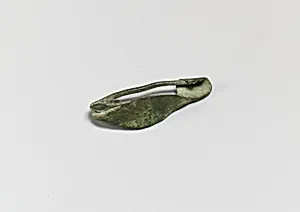
Fibula
Unknown Artist
9th–6th century BCE
Medium
Bronze
Dimensions
Other: 1 3/16 in. (3 cm)
Classification
Bronzes
Culture & Period
Italic · Iron Age or later
Department
Greek and Roman Art
Museum
Metropolitan Museum of Art, New York, NY
Credit
Purchase, 1896
Accession Number
96.9.303
Rights
Public Domain
Art Historical Context
This delicate bronze fibula, dating from the 9th to 6th century BCE, the exquisite metalwork of ancient Italic cultures during the Iron Age. Measuring just 1 3/16 inches (3 cm), this clasp—used to fasten garments—was both a practical accessory and a symbol of. Crafted by an unknown artisan, its small scale highlights the precision of early bronze-casting techniques, where molten metal was poured into molds to create functional yet elegant jewelry. In the vibrant world of pre-Roman Italy, Italic peoples like the Villanovans and early Latins produced such fibulae as everyday adornments that reflected social hierarchy and cultural identity. This piece, classified among bronzes in the Metropolitan Museum of Art's Greek and Roman Art Department, offers a window into Iron Age life, when bronze remained a prized medium despite the rise of iron tools. Acquired through purchase in 1896, it underscores the museum's commitment to preserving these humble yet historically vital artifacts. Though simple in form, the fibula reveals the ingenuity of ancient craftsmen, bridging utility and artistry in a time of emerging Mediterranean civilizations. Visitors can marvel at how such tiny objects carried profound cultural weight.