
Fichu
Unknown Artist
mid-19th century
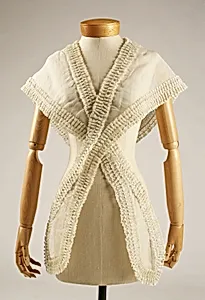
Medium
cotton
Classification
Fichu
Culture
American or European
Department
Costume Institute
Museum
Metropolitan Museum of Art, New York, NY
Credit
Gift of Mary Pierrepont Beckwith, 1969
Accession Number
C.I.69.33.21
Rights
Public Domain
Art Historical Context
Nestled in the Metropolitan Museum Art's Costume Institute, delicate *Fichu* from the-19th century exemplifies everyday elegance in women's fashion. Crafted from fine cotton by an unknown artist, the fichu is a triangular kerchief or shawl designed to drape gracefully over the shoulders and neck, modestly framing the décolletage Its lightweight cotton medium made it ideal for warmer weather or indoor wear, reflecting the practical yet refined tastes of the Victorian era. Historically, fichus bridged American and European styles during a time of transatlantic fashion exchange, when modesty and femininity were paramount in women's attire. Popular from the 18th century onward, by the mid-1800s they had evolved into versatile accessories, often embroidered or lace-trimmed for special occasions—though this example's simplicity suggests daily use among the middle class. Such garments offer a window into the social norms of the period, where even undergarments like fichus underscored propriety. Generously gifted by Mary Pierrepont Beckwith in 1969, this piece preserves a tangible link to 19th-century life, reminding us how fashion wove personal identity with cultural ideals. Visitors, imagine pinning it just so for a promenade—timeless charm in every fold!