
Fifty-three Stations on the Tōkaidō Road (Tōkaidō gojūsantsugi ehon ekiro no suzu) 東海道五十三次絵本駅路鈴
ca. 1840
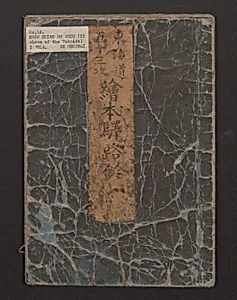
Medium
Two volumes; ink and color on paper
Dimensions
Each: 9 × 6 1/4 × 3/8 in. (22.9 × 15.9 × 1 cm)
Classification
Illustrated Books
Culture & Period
Japan · Edo period (1615–1868)
Department
Asian Art
Museum
Metropolitan Museum of Art, New York, NY
Credit
Rogers Fund, 1918
Accession Number
JIB14a, b
Rights
Public Domain
Tags
Art Historical Context
Katsushika Hokus, the legendary Japanese artist famed for ukiyo-e woodblock prints like *The Great Wave offanagawa*, created *Fifty-three Stations on theōkaidō Road* around 1840. This charming two-volume illustrated book (*ehon*) captures the 53 post stations along the Tōkaidō route—a vital coastal highway connecting Edo (modern Tokyo) and Kyoto during the Edo period1615–1868). Rendered in ink and color on paper, each compact page (9 × 6¼ in.) bursts with lively scenes of travelers, bridges, houses, men, and women, evoking the bustle of journeying samurai, merchants, and pilgrims. The Tōkaidō symbolized mobility and cultural exchange in isolationist Japan, inspiring countless artists. Hokusai's version, subtitled *Ekiro no Suzu* ("Bell at the Stations"), showcases his masterful ukiyo-e style: dynamic compositions, bold colors, and keen observation of everyday life. Unlike larger prints, this intimate book format made the journey accessible to a wider audience, blending landscape beauty with human drama. Housed in the Metropolitan Museum of Art's Asian Art department (Rogers Fund, 1918), it highlights Edo Japan's print culture, where art democratized travel dreams for urban dwellers landlocked by travel restrictions. A delightful window into a bygone era!
About the Artist
Katsushika Hokusai · 1760–1849
Katsushika Hokusai (1760-1849) stands as one of history's most influential artists, a Japanese master who revolutionized the ukiyo-e woodblock print tradition and profoundly shaped Western art. Born in the Katsushika district of Edo (modern-day Tokyo) to an artisan family, Hokusai lived through nearly nine decades of extraordinary creative evolution, adopting over thirty different artistic names t...