
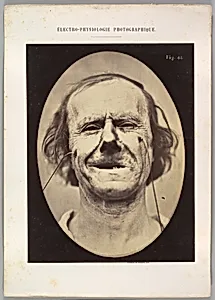
Figure 48: Mild weeping, pity and feeble false laughter
1854–56, printed 1862
Medium
Albumen silver print from glass negative
Dimensions
Image (Oval): 28.5 × 20.4 cm (11 1/4 × 8 1/16 in.) Sheet: 30.2 × 23.1 cm (11 7/8 × 9 1/8 in.) Mount: 40.2 × 28.5 cm (15 13/16 × 11 1/4 in.)
Classification
Photographs
Department
Photographs
Museum
Metropolitan Museum of Art, New York, NY
Credit
Purchase, The Buddy Taub Foundation Gift, Dennis A. Roach and Jill Roach, Directors; Harris Brisbane Dick and William E. Dodge Funds; and W. Bruce and Delaney H. Lundberg Gift, 2013
Accession Number
2013.173.26
Rights
Public Domain
Tags
Art Historical Context
In the mid-19th century, neurologist Guillaume-Benjamin-Amandenne de Boulogne the scientific study of human emotions through photography, collaborating with renowned photographer Adrien Tournachon (Nadar). *Figure 48: Mild weeping, pity and feeble laughter*, created between 1854–56 and printed in 1862 as an albumen silver print a glass negative, captures man's face in a complex blend of subtle expressions. This oval-framed image, measuring about 11¼ × 8 inches, exemplifies Duchenne's innovative method of electrically stimulating facial muscles to elicit "authentic" emotions, free from conscious posing. Duchenne's work, featured in his seminal 1862 book *Mécanisme de la physionomie humaine*, bridged science and art, influencing fields from psychology to portrait photography. The albumen silver process—using egg whites to bind light-sensitive silver salts—produced rich tonal depth and fine detail, ideal for documenting these fleeting micro-expressions. Printed posthumously in some cases, these photographs were not mere portraits but tools for dissecting human feeling. Today, at The Metropolitan Museum of Art, this piece invites us to ponder the universality of emotion. Gaze closely: the interplay of sorrow, empathy, and strained mirth reveals Duchenne's quest to map the soul's grammar, a fascinating precursor to modern neuroscience and emotive imagery in art.
About the Artist
Guillaume-Benjamin-Amand Duchenne de Boulogne|Adrien Tournachon (French|French) · 1806 |1825 –1875 |1903
French, 1806–1875|French, 1825–1903