
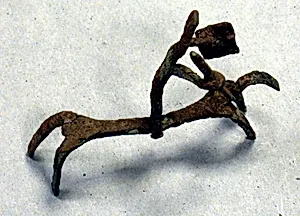
Figure: Equestrian
Unknown Artist
12th–16th century
Medium
Copper alloy
Dimensions
H. 1 3/8 × W. 2 in. (3.5 × 5.1 cm)
Classification
Metal-Sculpture
Culture
Middle Niger civilization
Department
Arts of Africa, Oceania, and the Americas
Museum
Metropolitan Museum of Art, New York, NY
Credit
Bequest of John B. Elliott, 1997
Accession Number
1999.47.89
Rights
Public Domain
Tags
Art Historical Context
This exquisite copper alloy sculpture, titled *Figure: Equestrian*,ails from the Middle Niger in West Africa, dating to the 12th–16th centuries. Standing just 1 3/8 inches tall 2 inches wide, diminutive metalwork captures a rider astride a horse—a rare and prestigious motif in the region. Crafted through sophisticated lost-wax casting techniques typical of ancient African metallurgy, the figure's smooth, patinated surface highlights the artisans' mastery in manipulating copper alloys for durability and expressive detail. In the Middle Niger culture, centered around the Inland Niger Delta (modern-day Mali), such equestrian figures symbolized power, mobility, and elite status. Horses, imported via trans-Saharan trade routes, were scarce and costly, often reserved for warriors, rulers, or spiritual leaders. These small sculptures likely served as votive offerings, amulets, or status symbols, reflecting a vibrant society of urban centers like Djenné, where metalworking flourished alongside terracotta and architecture. Today, this piece from the Metropolitan Museum of Art's Arts of Africa, Oceania, and the Americas collection invites us to ponder the interconnected worlds of medieval West Africa—bridging trade, religion, and artistry in a compact, timeless form.