
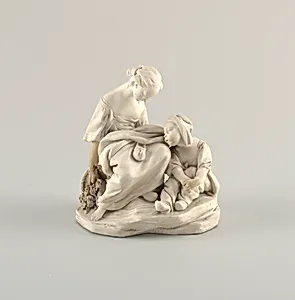
Figure "Le Sabot Cassé" (The Broken Shoe)
Classification
ceramics
Department
Smithsonian Collection
Museum
Smithsonian American Art Museum
Credit
Gift of Mrs. A. Murray Young
Accession Number
1937-28-22
Rights
Public Domain
About this artwork
Research in Progress
Art Historical Context
Nestled in the Smithsonian American Art Museum's collection *Figure "Le Saboté" (The Broken)* hails from the prestigious Sèvres Porcelainufactory, France's royal porcelain works established in 1756 Created around 1760, this ceramic figure exemplifies the manufactory's mastery during the lavish Rococo era under Louis XV. Gifted by Mrs. A. Murray, it reflects the transatlantic appeal of European luxury goods in American collections. Sèvres was renowned for its innovative soft-paste porcelain and intricate figural sculptures, often depicting whimsical scenes from everyday life, mythology, or theater. "Le Sabot Cassé," likely a playful vignette involving a broken wooden shoe (sabot), captures the lighthearted, elegant style of the period—think delicate modeling, vibrant underglaze colors, and sometimes unglazed biscuit finishes for a matte, sculptural effect. These pieces were status symbols for the aristocracy, showcasing technical virtuosity like precise gilding and naturalistic poses. Though research continues, this figure highlights Sèvres' cultural influence, blending artistry with storytelling. Imagine a mischievous child or coquettish figure mid-dilemma, embodying 18th-century French charm that still delights today. A testament to enduring craftsmanship!