
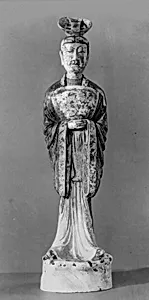
唐 彩繪陶文吏俑|Figure of a civil official
Unknown Artist
7th–8th century
Medium
Earthenware with glaze and pigments
Dimensions
H. 36 1/2 in. (92.7 cm)
Classification
Tomb Pottery
Culture & Period
China · Tang dynasty (618–907)
Department
Asian Art
Museum
Metropolitan Museum of Art, New York, NY
Credit
Gift of Mrs. Edward S. Harkness, 1923
Accession Number
23.95.1
Rights
Public Domain
Tags
Art Historical Context
Step into the vibrant world of Tang dynasty China with this striking *Figure of a Civil Official (唐 彩繪陶文吏俑), crafted between the 7th and 8th. During the Tang era (618–907), hailed as China's golden age of cosmopolitanism and prosperity, tomb pottery like this served as mingqi—spirit figures placed in graves to accompany the deceased into the afterlife. Standing at an impressive 36½ inches (92.7 cm) tall, this earthenware sculpture depicts a robed bureaucrat, embodying the era's vast civil service that powered imperial administration. Artisans shaped the figure from low-fired earthenware, then applied colorful glazes and pigments to bring it to life with vivid details—think flowing robes, stern expressions, and intricate accessories that highlight the official's rank. This polychrome technique, typical of Tang tomb art, preserved the figures' realism despite time's wear, offering a window into daily dress and hierarchy. Culturally, such figures underscore Tang beliefs in immortality and the afterlife's continuity with earthly life, where even officials ensured smooth bureaucracy beyond the grave. A generous gift to the Metropolitan Museum of Art in 1923, this piece invites us to ponder the blend of artistry, spirituality, and social order in ancient China.