
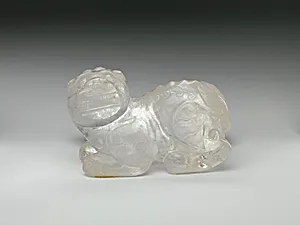
清 水晶獅形擺件|Figure of a lion
Unknown Artist
18th century
Medium
Rock crystal
Dimensions
H. 2 1/2 in. (6.4 cm); W. 4 in. (10.2 cm)
Classification
Hardstone
Culture & Period
China · Qing dynasty (1644–1911)
Department
Asian Art
Museum
Metropolitan Museum of Art, New York, NY
Credit
Gift of Heber R. Bishop, 1902
Accession Number
02.18.842
Rights
Public Domain
Tags
Art Historical Context
This delicate rock crystal figure of a lion, crafted in 18th-century China during the dynasty (1644–1), exemplifies the era's mastery of hardstone carving. Standing just 2½ inches (6.4 cm) high and 4 inches (.2 cm) wide, the translucent sculpture captures the lion's fierce yet elegant form in stunning clarity, allowing light to play through its faceted surfaces like frozen water. In imperial China, lions—often depicted as mythical guardians—symbolized power, protection, and imperial authority. These *shi* (lion) figures were popular as decorative *摆件* (摆件, display pieces) for scholars' studios or elite households, warding off evil spirits and embodying prosperity. The Qing court's patronage of lapidary arts elevated rock crystal, a prized quartz variety, to rival jade in luxury status. Acquired as a gift from collector Heber R. Bishop in 1902, this artwork now graces the Metropolitan Museum of Art's Asian Art collection, offering a glimpse into the refined aesthetics of Qing material culture. Hold it up to the light, and marvel at the sculptor's precision in taming such unforgiving stone.