
Figure of a Man
Unknown Artist
late 18th century
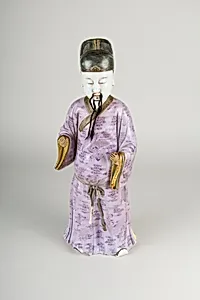
Medium
Porcelain painted in overglaze polychrome enamels (Jingdezhen ware)
Dimensions
H. 16 1/4 in. (41.3 cm)
Classification
Ceramics
Culture & Period
China · Qing dynasty (1644–1911)
Department
Asian Art
Museum
Metropolitan Museum of Art, New York, NY
Credit
Purchase by subscription, 1879
Accession Number
79.2.69
Rights
Public Domain
Tags
Art Historical Context
This elegant *Figure of a Man*, in the late 18th century China's Qing dynasty (16441911), exemplifies the pinnacle of imperial porcelain production at Jingdezhen, the renowned center for fine ceramics. Standing at 16¼ inches (41.3 cm) tall, this porcelain figurine a poised male figure, likely intended as a decorative ornament for scholarly or elite interiors. Acquired by subscription in 1879 and now housed in the Metropolitan Museum of Art's Art Department, it reflects the era's export boom, when such wares graced homes across Asia and Europe. The artwork's medium—porcelain painted in overglaze polychrome enamels—highlights masterful technical innovation. After the initial high-temperature firing to create the translucent white body, vibrant enamels were applied over the glaze and fired at lower temperatures, yielding rich, durable colors that wouldn't run or fade. This technique, perfected in Jingdezhen kilns, allowed for intricate detailing on clothing, facial features, and accessories, showcasing the Qing artisans' precision and aesthetic refinement. Culturally, these figurines embodied Confucian ideals of poise and status, serving as symbols of prosperity and cultural sophistication. Though the artist remains unknown, the piece's survival underscores the enduring legacy of Qing ceramics, blending artistry with everyday luxury.