
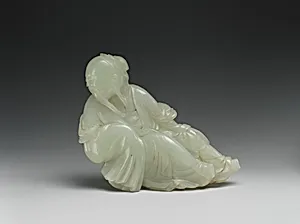
清 玉雕文士|Figure of a scholar
Unknown Artist
18th century
Medium
Jade (nephrite)
Dimensions
H. 3 3/4 in. (9.5 cm); W. 4 in. (10.2 cm); D. 1/2 in. (1.3 cm)
Classification
Jade
Culture & Period
China · Qing dynasty (1644–1911)
Department
Asian Art
Museum
Metropolitan Museum of Art, New York, NY
Credit
Gift of Heber R. Bishop, 1902
Accession Number
02.18.470
Rights
Public Domain
Tags
Art Historical Context
This delicate nephrite jade figure of a scholar, carved in 18th-century Qing dynasty China (1644–1911), captures the essence of the literati ideal—a philosopher embodying wisdom, virtue, and scholarly pursuit. Standing just 3¾ inches tall, with a slender 4-inch width and remarkably thin ½-inch depth, it exemplifies the miniaturist's art, likely intended as a personal ornament, rest, or desk adornment for an educated elite. Gifted to the Metropolitan Museum of Art 1902 by Heber R. Bishop, it in the Asian Art Department, a testament to the era's reverence for Confucian scholars who shaped imperial bureaucracy and cultural life. Nephrite jade, prized in China for its toughness, creamy translucency, and symbolic purity, was a medium of imperial prestige during the Qing. Artisans employed intricate techniques—incising fine details like flowing robes, a high scholar's hat, and contemplative pose—using abrasives and polishing to achieve a luminous polish that evokes moral clarity. This unknown artist's mastery highlights jade's role in conveying status and spirituality, where the stone's natural veins enhance the figure's lifelike poise. In Qing society, such carvings bridged art and philosophy, inspiring reflection amid daily rituals. Visitors, admire how this petite masterpiece distills centuries of cultural aspiration into enduring stone.