
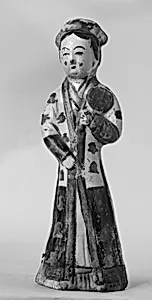
Figure of a standing lady
Unknown Artist
12th–13th century
Medium
Stoneware with polychrome enamels (Cizhou type ware)
Dimensions
H. 4 7/8 in. (12.4 cm)
Classification
Ceramics
Culture & Period
China · Jin dynasty (1115–1234)
Department
Asian Art
Museum
Metropolitan Museum of Art, New York, NY
Credit
Rogers Fund, 1918
Accession Number
18.56.50
Rights
Public Domain
Tags
Art Historical Context
This delicate stoneware figure of a standing lady, crafted during China's Jin dynasty (11151234), captures the elegance of 12th–13th century ceramic artistry. Standing just 4 7/8 inches tall, the figurine exemplifies Cizhou-type ware, renowned for its white clay body and innovative decorative techniques from kilns in northern China. The polychrome enamels—ibrant overglaze colors applied after firing—bring the lady's flowing robes and poised stance to life, highlighting the era's mastery of bold, expressive designs. Produced under the Jurchen Jin rulers, who controlled northern China amid cultural exchanges with neighboring regions, such small ceramic figures often served funerary or household purposes. They reflect the dynasty's thriving pottery industry, where everyday motifs blended with refined aesthetics. The unknown artist's use of enamels on durable stoneware not only ensured longevity but also allowed for vivid storytelling through color and form. Today, housed in the Metropolitan Museum of Art's Asian Art department (Rogers Fund, 1918), this piece invites us to appreciate Jin innovation—bridging utility and beauty in a turbulent time. A charming glimpse into women's portrayal in ancient Chinese art.