
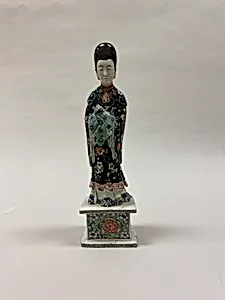
Figure of a standing lady
Unknown Artist
19th century
Medium
Biscuit with polychrome enamels (Jingdezhen ware)
Dimensions
H. 12 5/8 in. (32.1 cm); W. 3 3/4 in. (9.5 cm); D. 2 3/4 in. (7 cm)
Classification
Ceramics
Culture & Period
China · Qing dynasty (1644–1911)
Department
Asian Art
Museum
Metropolitan Museum of Art, New York, NY
Credit
Gift of Edwin C. Vogel, 1962
Accession Number
62.222.6
Rights
Public Domain
Tags
Art Historical Context
This exquisite *Figure of a Standing Lady*, crafted in the 19th century during China's Qing dynasty (16441911), stands as a delicate testament to the porcelain mastery of Jingdezhen, the kiln center renowned worldwide for its fine ceramics. Measuring about 12⅝ inches tall, this porcelain sculpture—fired once without glaze for a soft, matte finish—features a graceful female figure adorned with vibrant polychrome enamels. overglaze colors, applied and low-fired for luminosity, bring her flowing robes and serene expression to life, capturing the refined beauty idealized in Qing-era art. Jingdezhen ware like this was produced for both domestic elite and export markets, showcasing advanced techniques that blended sculptural form with painterly detail. Biscuit porcelain, popular in the 18th and 19th centuries, allowed artists to emphasize naturalistic textures, from silk folds to porcelain skin, without the sheen of traditional glazes. Though the artist remains unknown, such figures often depicted court ladies or beauties, reflecting cultural values of elegance and poise amid the dynasty's artistic zenith. A gift to the Metropolitan Museum of Art in 1962, this piece invites visitors to appreciate the Qing's porcelain legacy—where everyday luxury met technical brilliance. Gaze closely at her poised stance, and you'll sense the quiet harmony of a bygone era.