
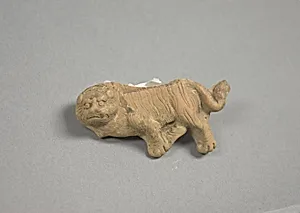
Figure of a Tiger
Unknown Artist
Medium
Unglazed pottery
Dimensions
H. 1 1/4 in. (3.2 cm); W. 2 7/8 in. (7.3 cm)
Classification
Sculpture
Culture & Period
China · Song dynasty (960–1279) (?)
Department
Asian Art
Museum
Metropolitan Museum of Art, New York, NY
Credit
Rogers Fund, 1930
Accession Number
30.76.86
Rights
Public Domain
Tags
Art Historical Context
This diminutive *Figure of a*, crafted from unglazed pottery, captures the fierce grace of its subject in a compact form—standing just 1¼ inches tall and 2⅞ inches wide. Likely from China's Song dynasty (960–1279), a golden age of artistic refinement, this small sculpture exemplifies the period's mastery of ceramics. The unglazed earthenware, with its raw, earthy texture, highlights the potter's skill in modeling fine details like the tiger's alert posture, muscular form, and subtle facial features, fired to preserve a natural, stone-like patina. In Chinese culture, tigers symbolized power, protection, and the ferocity of the natural world, often appearing in art as guardians against evil spirits or emblems of imperial strength. During the Song era, such animal figurines were popular in households, possibly as toys, decorative objects, or ritual items, reflecting a growing appreciation for realism and everyday whimsy amid scholarly pursuits. The unglazed technique, less common than the dynasty's famed celadon glazes, suggests a folk or utilitarian origin, emphasizing form over flashy ornamentation. Acquired through the Rogers Fund in 1930, this treasure from the Metropolitan Museum of Art's Asian Art collection invites us to ponder the artistry of anonymous hands, bridging ancient China's vibrant ceramic tradition with our modern gaze.