
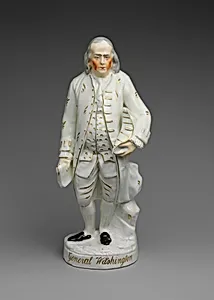
Figure of Benjamin Franklin
Unknown Artist
1835–45
Medium
Earthenware, transfer-printed
Dimensions
H. 14 3/4 in. (37.5 cm)
Classification
Figure
Culture
British (American market)
Department
The American Wing
Museum
Metropolitan Museum of Art, New York, NY
Credit
Gift of William H. Huntington, 1883
Accession Number
83.2.258
Rights
Public Domain
Tags
Art Historical Context
This charming earthenware figure of Benjamin Franklin, crafted by an unknown artist between 1835 and 1845, stands at 14¾ inches tall and captures the Founding Father's likeness in a dignified pose. Produced in Britain specifically for the American market, it exemplifies the popular Staffordshire pottery tradition, where affordable ceramic sculptures adorned middle-class homes as symbols of patriotism and admiration for historical icons. Transfer-printing—a technique that allowed intricate portraits to be mass-produced by printing designs onto paper, then transferring them to unglazed clay before firing—brought Franklin's familiar features to life with remarkable detail and vibrancy. Dating to the decades before the Civil War, this piece reflects Franklin's enduring legacy as a polymath, inventor, and statesman, even half a century after his death in 1790. Such figures were collectible keepsakes, bridging British manufacturing prowess with American cultural pride, and highlight the transatlantic exchange of ideas and goods in the 19th century. Today, housed in The Metropolitan Museum of Art's American Wing as a gift from William H. Huntington in 1883, it invites visitors to ponder how everyday objects preserved the spirit of the American Revolution for new generations.