
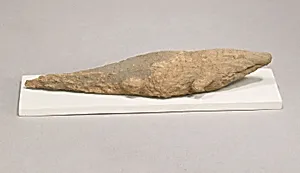
Figure of crocodile
Unknown Artist
ca. 1981–1640 B.C.
Medium
Wood
Dimensions
L. 13.7 × W. 3.5 × H. 2.1 cm (5 3/8 × 1 3/8 × 13/16 in.)
Classification
Figure, crocodile
Period
Middle Kingdom
Department
Egyptian Art
Museum
Metropolitan Museum of Art, New York, NY
Credit
Rogers Fund and Edward S. Harkness Gift, 1922
Accession Number
22.1.673
Rights
Public Domain
Tags
Art Historical Context
This delicate wooden figure of a crocodile, carved during Egypt's Middle Kingdom (ca 1981–1640 B.C.), hails from Dynasties 12–13 and measures just 13.7 cm long. Crafted by an unknown artist, its compact form—13.7 × 3.5 × 2.1 cm—suggests it was likely a portable object, perhaps an amulet or votive offering. Wood was a precious medium in ancient Egypt, sourced from imported cedar or local acacia, allowing artisans to capture fine details like the reptile's textured scales and sinuous body with remarkable precision using simple tools. In the Middle Kingdom, a period of renewed stability and artistic refinement after the First Intermediate Period, such figurines reflected Egypt's deep connection to the Nile's wildlife. Crocodiles, both feared and revered along the riverbanks, symbolized the dual forces of danger and protection in daily life and ritual. This piece, acquired through the Rogers Fund and Edward S. Harkness Gift in 1922, now resides in the Metropolitan Museum of Art's Egyptian Art department, offering visitors a tangible glimpse into the era's craftsmanship and worldview. (198 words)