
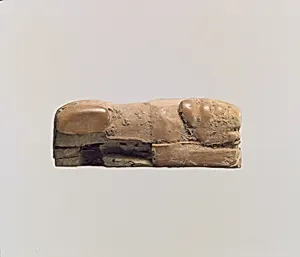
Figure of crouching lion
Unknown Artist
ca. 8th–7th century BCE
Medium
Ivory
Dimensions
3/4 in. × 1/4 in. × 1 in. (1.9 × 0.7 × 2.6 cm)
Classification
Ivory/Bone-Sculpture
Culture & Period
Iran · Iron Age II
Department
Ancient Near Eastern Art
Museum
Metropolitan Museum of Art, New York, NY
Credit
Rogers Fund, 1943
Accession Number
43.102.29
Rights
Public Domain
Tags
Art Historical Context
This exquisite ivory figure of a crouching lion carved around the 8th–7th BCE during Iran's Iron Age II, offers a glimpse into the masterful artistry of ancient Near Eastern. Standing just 3/4 inch tall, this tiny sculpture from an unknown artist captures the lion's tensed muscles and alert posture with remarkable precision, suggesting it may have adorned furniture, jewelry, or ritual objects. Lions were potent symbols in ancient Iranian culture, embodying strength, protection, and royal power, much like in neighboring Mesopotamian traditions. Crafted from elephant ivory—a rare, imported luxury material—the piece highlights advanced carving techniques. Artisans delicately shaped the dense tusk to convey dynamic tension in the beast's haunches and arched back, all within a mere 1-inch length. Such miniature sculptures were prized for their portability and detail, reflecting the sophistication of Iron Age workshops in regions like northwestern Iran. Today, this Rogers Fund acquisition graces the Metropolitan Museum of Art's Ancient Near Eastern Art collection, inviting visitors to marvel at how ancient hands transformed humble ivory into a timeless emblem of ferocity and finesse.