
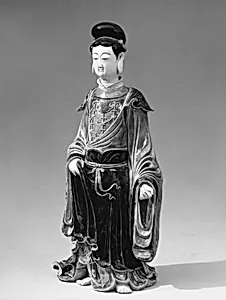
Figure of Guanyin
Unknown Artist
Medium
Porcelain
Dimensions
H. 23 in. (58.4 cm); W. 10 1/2 in. (26.7 cm); D. 7 3/4 in. (19.7 cm)
Classification
Ceramics
Culture & Period
China · Ming dynasty (1368–1644)
Department
Asian Art
Museum
Metropolitan Museum of Art, New York, NY
Credit
Bequest of Benjamin Altman, 1913
Accession Number
14.40.218
Rights
Public Domain
Tags
Art Historical Context
This elegant porcelain figure of Guanyin, the bodhisattva of infinite compassion in Chinese Buddhism, stands as a serene testament to Ming dynasty artistry (1368–1644). Measuring 23 inches tall, the sculpture captures Guanyin in a graceful, contemplative pose, embodying the deity's role as a merciful protector who hears the cries of the suffering. Crafted by an unknown artist, it exemplifies the Ming period's mastery of porcelain, a medium that reached unparalleled refinement during this era, with its smooth, translucent body fired at high temperatures for exceptional durability and subtle sheen. Porcelain figures like this were prized in imperial and scholarly households, often placed on altars for devotion or as symbols of spiritual harmony. Guanyin's prominence in Chinese culture reflects Buddhism's deep integration into daily life, evolving from the male Avalokiteshvara of Indian origins into a feminine icon of empathy by the Ming dynasty. The sculpture's modest scale yet imposing presence highlights the era's innovative ceramic techniques, including precise molding and glazing that preserved intricate details of flowing robes and serene features. Now housed in the Metropolitan Museum of Art's Asian Art Department, this piece entered the collection through the 1913 bequest of Benjamin Altman, inviting visitors to ponder the timeless appeal of compassion across centuries.