
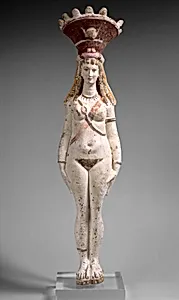
Figure of Isis-Aphrodite
Unknown Artist
2nd century A.D.
Medium
Terracotta painted brown, black, red, and pink on white engobe
Dimensions
H. 49.5 cm (19 1/2 in.); w. 12.5 cm (4 15/16 in.)
Classification
Statuette, standing goddess, Isis-Aphrodite
Period
Roman Period
Department
Egyptian Art
Museum
Metropolitan Museum of Art, New York, NY
Credit
Purchase, Lila Acheson Wallace Gift, 1991
Accession Number
1991.76
Rights
Public Domain
Tags
Art Historical Context
This enchanting terracotta figure of Isis-Aphrodite, to the 2nd A.D., embodies the vibrant cultural fusion of Roman Egypt. Standing nearly 20 inches tall, the statue depicts the syncretic goddess—combining the Egyptian deity Isis, protector of the pharaohs and mother of Horus, with Aphrodite, the Greek goddess love and beauty. Her elaborate crown, a hallmark of Isis iconography, underscores her divine authority and allure, reflecting how Roman rule blended local Egyptian traditions with Hellenistic and imperial influences. Crafted from terracotta coated in white engobe—a slip that provided a smooth canvas for painting—the figure is vividly adorned in brown, black, red, and pink pigments. This technique was prized in the Roman Period for producing affordable yet striking votive offerings for household shrines or temples, allowing mass devotion to popular cults. The colors, though faded by time, originally heightened the goddess's lifelike presence. Isis's cult thrived across the Roman Empire, symbolizing fertility, magic, and salvation, making this figure a window into everyday spirituality. Acquired through the Lila Acheson Wallace Gift and housed in the Metropolitan Museum of Art's Egyptian Art department, it invites us to marvel at antiquity's enduring goddess worship.