
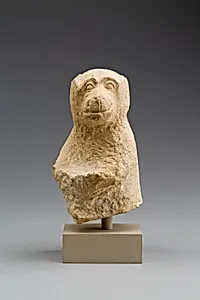
Figure of monkey
Unknown Artist
ca. 1981–1640 B.C.
Medium
Limestone
Dimensions
H. 10.8 cm (4 1/4 in.); W. 5.6 cm (2 3/16 in.); D. 6.9 cm (2 11/16 in.)
Classification
Figurine, monkey
Period
Middle Kingdom
Department
Egyptian Art
Museum
Metropolitan Museum of Art, New York, NY
Credit
Rogers Fund, 1934
Accession Number
34.1.179
Rights
Public Domain
Tags
Art Historical Context
This charming limestone figure of a monkey, carved Egypt's Middle Kingdom (ca. 1981–1640 B.C.), hails from Dynasty 12–13, a golden age of artistic refinement and renewed cultural stability after the First Intermediate Period. Standing just 10.8 cm tall, this petite sculpture captures the playful curiosity of its subject with compact proportions and a lively posture, reflecting the era's shift toward more naturalistic and intimate portrayals in art, often seen in small-scale votive objects or amulets. Crafted from limestone—a favored medium for its fine grain that allowed sculptors to achieve smooth surfaces and intricate details—the figure showcases the skilled stoneworking techniques of ancient Egyptian artisans. Tools like copper chisels and abrasives would have been used to carve and polish the stone, highlighting the monkey's expressive face and curled tail. Such animal figures were common in Middle Kingdom households or temples, possibly serving as protective talismans or offerings. Monkeys held cultural fascination in ancient Egypt, often symbolizing exoticism, agility, or divine attributes linked to gods like Thoth. Acquired through the Rogers Fund in 1934, this piece now graces the Metropolitan Museum of Art's Egyptian Art collection, inviting visitors to ponder the daily lives and beliefs of a civilization over 3,800 years old.