
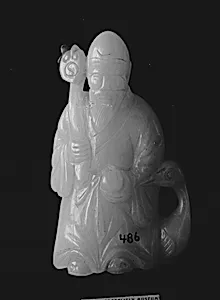
Figure of Shou Lao, Longevity Deity
Unknown Artist
Medium
Jadeite, light lavender with golden russet stainings in part
Dimensions
H. 2 7/8 in. (7.3 cm); W. 1 9/16 in. (4 cm); L. 7/8 in. (2.2 cm)
Classification
Jade
Culture & Period
China · Qing dynasty (1644–1911), Qianlong period (1736–95)
Department
Asian Art
Museum
Metropolitan Museum of Art, New York, NY
Credit
Gift of Heber R. Bishop, 1902
Accession Number
02.18.486
Rights
Public Domain
Tags
Art Historical Context
This exquisite jadeite figure depicts Shou Lao, the revered Chinese deity of longevity, crafted during the Qianlong period (1736–95) of the Qing dynasty (4–1911). just under 3 inches tall, the small-scale sculpture captures the essence of imperial Chinese artistry, likely produced in the renowned jade workshops of the era. Shou Lao, often portrayed as an elderly sage symbolizing eternal life and prosperity, embodies wishes for health and endurance—core values in Chinese culture. Carved from rare light lavender jadeite with distinctive golden russet stainings, the piece highlights the material's prized qualities in China, where jade has long represented purity, immortality, and moral virtue. Qing artisans mastered intricate carving techniques, polishing the stone to a luminous glow while preserving its natural veining, which adds a unique, organic beauty. The Qianlong emperor, a passionate collector, elevated jade carving to new heights, commissioning works like this for scholarly appreciation or personal altars. Housed in the Metropolitan Museum of Art's Asian Art Department as a gift from Heber R. Bishop in 1902, this figure invites visitors to ponder the timeless pursuit of longevity amid China's artistic golden age. Its compact form suggests it was treasured by an elite owner, bridging devotion and aesthetic delight.