
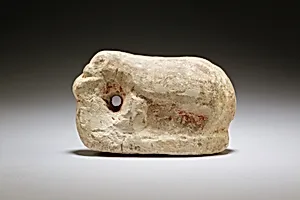
Figurine of hippopotamus
Unknown Artist
ca. 1981–1640 B.C.
Medium
Limestone, paint
Dimensions
L. 10 × W. 4.1 × H. 6.1 cm (3 15/16 × 1 5/8 × 2 3/8 in.)
Classification
Hippopotamus figurine
Period
Middle Kingdom
Department
Egyptian Art
Museum
Metropolitan Museum of Art, New York, NY
Credit
Rogers Fund and Edward S. Harkness Gift, 1922
Accession Number
22.1.1639
Rights
Public Domain
Tags
Art Historical Context
This enchanting limestone figurine of aopotamus, dating to Egypt's Middle Kingdom (ca 1981–1640 B.C., Dynasties12–13), captures ancient Egyptians' fascination with the mighty Nile River creature. Measuring a compact 10 cm long, 4.1 cm wide, and 6.1 cm high, it was skillfully carved from limestone—a durable, locally sourced stone ideal for small-scale sculptures—and enhanced with paint traces that once brought out its vibrant details, such as eyes and skin textures. Such modest dimensions suggest it was designed for portability, perhaps as a personal amulet or tomb offering. In Middle Kingdom art, hippo figurines like this one symbolized protection and the wild power of the Nile's fauna, reflecting Egypt's deep reverence for animals in daily life and the afterlife. Artisans employed subtractive carving techniques to render the animal's robust, barrel-shaped body with naturalistic accuracy, blending realism and symbolic stylization typical of the period's refined craftsmanship. Today, this piece graces the Metropolitan Museum of Art's Egyptian Art collection, thanks to the Rogers Fund and Edward S. Harkness Gift in 1922, offering visitors a tangible link to ancient beliefs in fertility and safeguarding.