
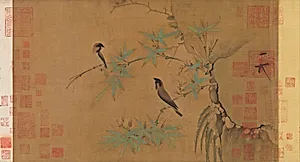
北宋 徽宗 竹禽圖 卷|Finches and bamboo
early 12th century
Medium
Handscroll; ink and color on silk
Dimensions
Image: 13 1/4 × 21 13/16 in. (33.7 × 55.4 cm) Overall with mounting: 13 3/4 in. × 27 ft. 6 5/16 in. (34.9 × 839 cm)
Classification
Paintings
Culture & Period
China · Northern Song dynasty (960–1127)
Department
Asian Art
Museum
Metropolitan Museum of Art, New York, NY
Credit
John M. Crawford Jr. Collection, Purchase, Douglas Dillon Gift, 1981
Accession Number
1981.278
Rights
Public Domain
Tags
About this artwork
Finches and bamboo is a paintings by Chinese artist Emperor Huizong, created in early 12th century. The work was created using handscroll; ink and color on silk. It measures Image: 13 1/4 × 21 13/16 in. (33.7 × 55.4 cm) Overall with mounting: 13 3/4 in. × 27 ft. 6 5/16 in. (34.9 × 839 cm). This piece represents the artistic traditions of China, Northern Song dynasty (960–1127), embodying the aesthetic values and technical expertise of its makers. The painting showcases the artistic techniques an...
Art Historical Context
Behold *Finches and Bamboo*, a masterful handscroll painted by Emperor Huizong the Northern Song dynasty (–1127) in the early 12th century. Created in ink and color on silk the image measures a compact 13¼ × 21⅞ inches (33.7 × 55.4 cm), but fully mounted, it extends an impressive 27½ feet (839 cm)—perfect for slow, meditative viewing as it unrolls to reveal delicate finches perched amid swaying bamboo stalks. Emperor Huizong, the eighth and penultimate ruler of the Northern Song, was a renowned artist whose refined works epitomize the era's "scholar-amateur" aesthetic. This painting captures the dynasty's pinnacle of technical virtuosity, blending precise ink lines with subtle color washes to evoke nature's elegance. Bird-and-bamboo motifs, common in Song painting, symbolize resilience and harmony, reflecting Confucian ideals of balance in art and life. Housed in the Metropolitan Museum of Art's Asian Art department since 1981 (John M. Crawford Jr. Collection, Purchase, Douglas Dillon Gift), this treasure offers a window into imperial creativity and the sophisticated handscroll tradition, where viewers engage intimately with the scroll's rhythms, much as courtiers did centuries ago.