
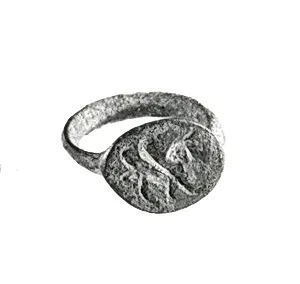
Finger ring
Unknown Artist
ca. 5th–4th century BCE
Medium
Bronze
Classification
Metalwork-Ornaments
Culture & Period
Achaemenid · Achaemenid
Department
Ancient Near Eastern Art
Museum
Metropolitan Museum of Art, New York, NY
Credit
Purchase, Mrs. Peter Oliver Gift, 1980
Accession Number
1980.66.1
Rights
Public Domain
Art Historical Context
This delicate bronze finger ring hails from the Achaemenid Empire, the vast Persian realm that flourished from around 550–330 BCE under rulers like Darius I and Xerxes. Dating to the 5th–4 century BCE, it exemplifies the sophisticated metalwork of Ancient Near Eastern artisans, who crafted ornaments for both elite and everyday wear. Acquired by the Metropolitan Museum of Art in 0 through a generous gift, this piece invites us to touch the daily lives of people in one of history's greatest empires. Bronze, an alloy of copper and tin, was prized for its durability and workability, allowing skilled craftsmen to cast or hammer intricate forms. Achaemenid jewelry often blended influences from across the empire—from Mesopotamian motifs to Greek and Egyptian styles—reflecting the cultural crossroads of Persepolis and Susa. Though simple in form, such rings served practical and symbolic purposes, possibly sealing documents or signifying status. In the Achaemenid world, personal adornments like this ring underscored a cosmopolitan aesthetic, where jewelry bridged social classes and echoed imperial grandeur. Imagine it gracing the hand of a merchant in Babylon or a noble at court— a small testament to an era of innovation and tolerance that shaped the ancient world.