
Finger Ring
Unknown Artist
3rd century
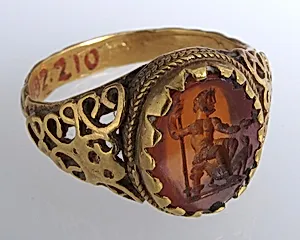
Medium
Gold, carnelian intaglio
Dimensions
Overall: 7/8 x 1/2 in. (2.2 x 1.2 cm) intaglio: 3/8 x 1/4 in. (0.9 x 0.6 cm)
Classification
Metalwork-Gold
Culture
East Germanic
Department
Medieval Art
Museum
Metropolitan Museum of Art, New York, NY
Credit
Gift of J. Pierpont Morgan, 1917
Accession Number
17.192.210
Rights
Public Domain
Tags
Art Historical Context
This exquisite finger ring, dating to the 3rd, hails from East Germanic culture and exemplifies the fine metalwork of early tribal artisans. Crafted from gold, it features a carnelian intaglio carved gemstone measuring just 3/8 x 1/4 inches (0.9 x 0.6 cm)—set into a delicate band of 7/8 x 1/2 inches (2.2 x 1.2 cm). The intaglio, where designs are incised into the stone for as a seal or personal emblem, highlights the wearer's status and craftsmanship during a period of cultural transition between Roman influence and emerging Germanic traditions. In the turbulent 3rd century, East Germanic peoples, such as Gothic tribes east of the Roman Empire, produced jewelry that blended local motifs with imported luxury materials like carnelian, prized for its rich red hue and durability. Tagged with associations to men, this ring likely served as a symbol of identity, authority, or protection, reflecting the martial and migratory world of these groups. Its classification as gold metalwork underscores the technical skill in working precious metals, a hallmark of pre-Medieval European artistry. A generous gift from J. Pierpont Morgan in 1917, this treasure now resides in the Metropolitan Museum of Art's Medieval Art department, offering a tangible link to ancient lives and the artistry of forgotten hands.