
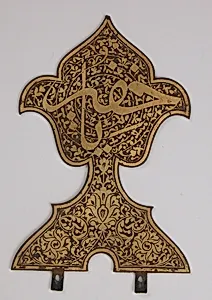
Finial with Inscription "Ya Khafar" ("Oh, Protector!")
Unknown Artist
17th century
Medium
Steel; inlaid with gold on front and silver foil overlay on reverse
Dimensions
Overall: H. 7 1/2 in. (19 cm) W. 4 3/4 in. (12 cm) With brackets: H. 7 1/2 in. (19 cm) Without brackets: H. 6 7/8 in. (17.5 cm)
Classification
Metal
Department
Islamic Art
Museum
Metropolitan Museum of Art, New York, NY
Credit
Purchase, Richard S. Perkins Gift, 1982
Accession Number
1982.44
Rights
Public Domain
Tags
Art Historical Context
This exquisite 17th-century finial, crafted from steel and adorned with intricate gold inlay on the front and silver overlay on the reverse, the masterful metalworking traditions of Islamic art. Measuring about 7½ inches tall, it likely served as a decorative top for a staff, standard, or architectural element, blending functionality with spiritual symbolism. during a golden age of Ottoman or Safavid craftsmanship—though the artist remains unknown—its robust steel form highlights the era's advanced techniques in forging and embellishment, where metal became a canvas for devotion. At its heart is the bold Arabic calligraphy proclaiming "Ya Khafar" ("Oh, Protector!"), a poignant invocation for safeguarding, common in talismanic objects meant to ward off evil or invoke divine aid. The gold inlay, a labor-intensive process of hammering precious metal into etched steel, creates a luminous contrast that draws the eye, while the silver reverse adds depth and balance. In Islamic culture, such calligraphy transcended mere decoration, embodying the sacred power of the written word from the Quran and poetry. Housed in the Metropolitan Museum of Art's Islamic Art department, this finial invites visitors to ponder the fusion of artistry and faith, where everyday objects pulsed with protective magic. A true gem of 17th-century ingenuity!