
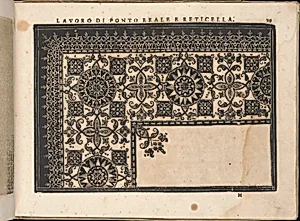
Fiore D'Ogni Virtu Per le Nobili Et Honeste Matrone, page 29 (recto)
Medium
Woodcut
Dimensions
Overall: 7 7/8 x 10 1/4 in. (20 x 26 cm)
Classification
Books|Prints|Ornament & Architecture
Department
Drawings and Prints
Museum
Metropolitan Museum of Art, New York, NY
Credit
Harris Brisbane Dick Fund, 1937
Accession Number
37.1(29)
Rights
Public Domain
Tags
Art Historical Context
This enchanting woodcut, *Fiore D'Ogni Virtu Per le Nobili Et Honesterone* (Flower of Virtue for Noble and Honestrons), page 29 (recto), dates to 1610 and hails from early 17th-century Italy Created by the pioneering female engraver Isabella Catanea Parasole, with contributions from Antonio Fachetti it forms part of a rare pattern book designed specifically for noblewomen. Parasole, one of the few women active in Roman printmaking during the late Renaissance, specialized in instructional volumes that blended artistry with moral guidance, encouraging "honest" pursuits like embroidery. Printed on a modest 7 7/8 x 10 1/4 in. sheet, this page showcases intricate floral motifs—likely rendered in delicate woodcut technique, where carved wooden blocks were inked and pressed to produce affordable, reproducible designs. Woodcuts were ideal for such books, allowing widespread dissemination of ornamental patterns for lace, needlework, and decorative arts. The flower's symbolic role here evokes virtues like purity and grace, aligning with the era's emphasis on women's domestic accomplishments as paths to moral elevation. Housed in the Metropolitan Museum of Art's Drawings and Prints department (Harris Brisbane Dick Fund, 1937), this work highlights the cultural intersection of art, gender, and craft in Counter-Reformation Italy, where pattern books empowered elite women to create beauty at home. A delightful glimpse into Renaissance ingenuity!
About the Artist
Isabella Catanea Parasole|Antonio Fachetti (Italian|Italian) · 1565 | –1625 |
Italian, ca. 1565/70–ca. 1625|