
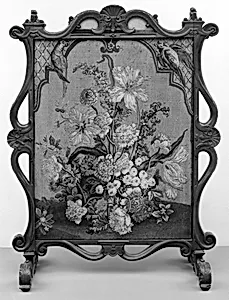
Fire screen
late 17th–early 18th century
Medium
Carved walnut, wool and silk tapestry panel
Dimensions
42 3/4 × 32 1/4 in. (108.6 × 81.9 cm)
Classification
Woodwork-Furniture
Culture
French
Department
European Sculpture and Decorative Arts
Museum
Metropolitan Museum of Art, New York, NY
Credit
Bequest of George Blumenthal, 1941
Accession Number
41.190.212a, b
Rights
Public Domain
Tags
Art Historical Context
This exquisite fire screen from the Beauvais tapestry manufactory, dating to the late 17th or early 18th century exemplifies the grandeur of French decorative arts during the transition from Louis XIV's reign to the Regency period. Crafted for opulent interiors, fire screens like this one served a practical purpose: shielding delicate complexions from the intense heat of open hearths while allowing warmth and light to filter through. Produced by the renowned Manufacture de Beauvais—established in 1664 royal patronage—it reflects France's mastery in blending functionality with lavish ornamentation. The screen features a finely carved walnut frame, showcasing the intricate woodwork typical of French ébénisterie, paired with a vibrant wool and silk tapestry panel (42 3/4 × 32 1/4 in.). The textile depicts a lush scene of blooming tulips, exotic parrots, and abundant flowers, evoking the era's fascination with botany and global trade. Silk threads lent a shimmering luster, while wool provided durability and rich color depth—techniques honed at Beauvais for enduring beauty in aristocratic homes. Bequeathed to the Metropolitan Museum of Art in 1941 by collector George Blumenthal, this piece highlights the cultural prestige of French furnishings, where everyday objects became canvases for artistic splendor. Visitors will appreciate how it captures the joie de vivre of Versailles-era luxury.