
Fish Gong
Unknown Artist
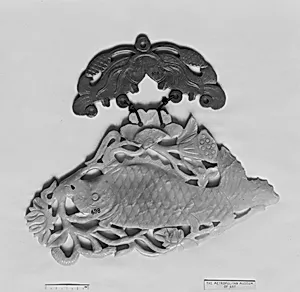
Medium
Nephrite, (a) gong: white of yellowish tone clouded with lighter tints; (b) mount: olive green with shades of brown
Dimensions
Gong: H. 12 1/4 in. (31.1 cm); W. 7 1/8 in. (18.1 cm); D. 1/2 in. (1.3 cm) Mount: W. 1 3/4 in. (4.4 cm); L. 7 1/4 in. (18.4 cm)
Classification
Jade
Culture & Period
China · Qing dynasty (1644–1911), Qianlong period (1736–95)
Department
Asian Art
Museum
Metropolitan Museum of Art, New York, NY
Credit
Gift of Heber R. Bishop, 1902
Accession Number
02.18.698a, b
Rights
Public Domain
Tags
Art Historical Context
Nestled in the Metropolitan Museum of Art's Asian Art collection, the *Fish Gong* is a example of Qing dynasty jade craftsmanship from the Qianlong (1736–95). Carved from nephrite—a durable, highly prized form of jade with its white-to-yellowish tones clouded in lighter tints for the gong and olive-green shades for the mount—this ritual object measures about 12 inches high. The gong's fish shape, adorned with floral motifs, reflects the imperial workshops' mastery during Emperor Qianlong's reign, a golden age of artistic patronage and technical innovation in China. In Chinese culture, jade symbolized purity, immortality, and moral virtue, often reserved for elite objects like this gong, which may have been struck in ceremonies for its resonant tone. Fish motifs evoke abundance and harmony (as in the phrase "year of plenty," sounding like "fish" in Chinese), while flowers add layers of auspicious symbolism. Nephrite's toughness demanded exceptional skill to carve intricate details without flaws, showcasing the period's lapidary expertise honed over generations. Gifted to the Met in 1902 by Heber R. Bishop, this piece invites visitors to appreciate how everyday sounds could carry profound cultural resonance in imperial China.