
Flagon
1800–1830
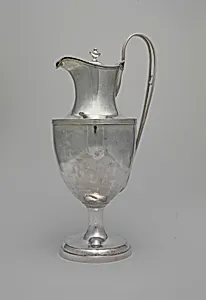
Medium
Silver
Dimensions
Overall: 16 7/16 x 7 1/2 in. (41.8 x 19.1 cm); 45 oz. 19 dwt. (1428.6 g) Foot: Diam. 5 1/2 in. (14 cm)
Classification
Flagon
Culture
American
Department
The American Wing
Museum
Metropolitan Museum of Art, New York, NY
Credit
Bequest of Alphonso T. Clearwater, 1933
Accession Number
33.120.237
Rights
Public Domain
Art Historical Context
This elegant silver flagon, crafted between 1800 and 1830 by Rufus Farnam and Henry Farnam, exemplifies the refined craftsmanship of early American silversmiths. Standing over sixteen inches tall and weighing nearly three pounds, the vessel was designed for serving beverages at the table, its substantial form and polished surface reflecting the status of its original owners. As part of the Metropolitan Museum’s American Wing, it represents the enduring tradition of domestic silverware in the young republic. During this period, silver objects like flagons combined utility with display, often passed down through generations as symbols of prosperity and taste. The Farnams worked in an era when American artisans drew on both European precedents and local innovations, producing pieces that balanced graceful proportions with sturdy construction. Its donation to the museum in 1933 by collector Alphonse T. Clearwater underscores the flagon’s lasting value as a document of American material culture. Visitors can appreciate how the medium itself—hand-raised silver—required exceptional skill, transforming raw metal into a functional work of art that still shines today.