
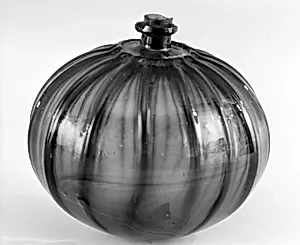
Flask
Unknown Artist
probably late 17th century
Medium
Glass
Dimensions
4 1/2 × 4 3/4 in. (11.4 × 12.1 cm)
Classification
Glass
Culture
French, Nevers
Department
European Sculpture and Decorative Arts
Museum
Metropolitan Museum of Art, New York, NY
Credit
Gift of Henry G. Marquand, 1883
Accession Number
83.7.215
Rights
Public Domain
Art Historical Context
This elegant glass flask, crafted in late 17th-century France by an unknown artist from Nevers, exemplifies the region's renowned tradition of enamel-painted glassware. Nevers, in central France, emerged as a key center for such decorative objects during the Baroque era under Louis XIV, blending functionality with artistic flair. Measuring just 4½ × 4¾ inches, this compact vessel was likely used to hold perfumes, oils, or medicinal elixirs, reflecting the opulent domestic life of the French nobility. The flask's significance lies in its masterful glassblowing and enamel decoration techniques. Artisans in Nevers adapted Italian-inspired methods, blowing thin, clear glass into symmetrical forms before applying vibrant enamel paints—fired at low temperatures to fuse colorful scenes onto the surface without distorting the glass. These pieces often featured intricate motifs like flowers, figures, or landscapes, showcasing the era's love for vivid storytelling and technical precision. A gift to the Metropolitan Museum of Art from Henry G. Marquand in 1883, this flask highlights the enduring appeal of French decorative arts. It invites us to appreciate how everyday objects became canvases for creativity, bridging utility and beauty in 17th-century Europe.