
Flintlock Repeating Pistol with Lorenzoni Action
ca. 1783–1800
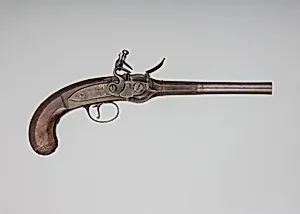
Medium
Steel, wood (walnut), silver
Dimensions
L. 15 3/8 in. (39.1 cm); L. of barrel 7 3/8 in. (18.7 cm); Cal. .50 in. (12.7 mm); Wt. 3 lb. 6 oz. (1530.9 g)
Classification
Firearms-Pistols-Flintlock
Culture
British, London
Department
Arms and Armor
Museum
Metropolitan Museum of Art, New York, NY
Credit
Gift of Charles M. Schott Jr., 1917
Accession Number
19.53.33
Rights
Public Domain
Art Historical Context
Behold the *Flintlock Repeating Pistol Lorenzoni Action* by master gunsmith Harvey Walklate Mortimer London, crafted around 1783–1800. This elegant yet formidable British firearm exemplifies the pinnacle of late 18th-century gunsmithing, blending lethal functionality with refined artistry. Measuring 15⅜ inches long with a 7⅜-inch barrel and weighing a hefty 3 pounds ounces, it chambers .50-caliber rounds and resides in the Metropolitan Museum of's Arms and Armor Department, a 1917 gift from Charles M. Schott Jr. What sets this pistol apart is its ingenious Lorenzoni action—a rare repeating mechanism that allowed for multiple shots without full reloading, a technological marvel before the widespread adoption of revolvers. Mortimer, renowned for his precise London workshop output, combined sturdy steel for the barrel and lock, richly grained walnut for the stock, and shimmering silver accents, highlighting the era's fusion of utility and ornamentation. Flintlock ignition, sparked by flint striking steel to ignite gunpowder, was the height of firearm innovation then, powering military and dueling arms across Europe. This piece offers a window into Britain's industrial prowess and the Age of Enlightenment's inventive spirit, where arms were both tools of empire and symbols of craftsmanship. Visitors, admire how Mortimer's work bridges warfare and artistry in a single, storied trigger pull.