
Floral Brocade
Unknown Artist
late 17th–early 18th century
Medium
Silk, metal wrapped thread; lampas
Dimensions
Textile: H. 27 1/2 in. (69.9 cm) W. 28 in. (71.1 cm) Mount: H. 33 in. (83.8 cm) W. 33 in. (83.8 cm)
Classification
Textiles-Brocades
Department
Islamic Art
Museum
Metropolitan Museum of Art, New York, NY
Credit
Gift of the Hajji Baba Club, in recognition of Dr. Maurice Dimand's long and distinguished service in the field of Islamic Art at the Metropolitan Museum, 1959
Accession Number
59.58
Rights
Public Domain
Tags
Art Historical Context
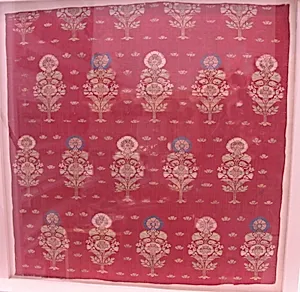
**Floral Brocade***Unknown Artist, late 17th–early 18th century* Silk, metal-wrapped thread; lampas weave The Metropolitan Museum of Art, York Step into the opulent world of Islamic textile artistry with *Floral Brocade*, a stunning example of late 17th- to early 18th-century from the Islamic world. Measuring about 27½ by 28 inches, this luxurious silk panel features intricate floral motifs—likely blooming flowers rendered in vibrant threads—that evoke the splendor of royal courts and elite households. Woven in the lampas technique, where patterned wefts float over a structured ground weave, it combines shimmering silk with metal-wrapped threads for a rich, reflective surface that catches the light like woven jewelry. Brocades like this were prized status symbols, adorning garments, turbans, and furnishings in Ottoman or Safavid realms, where floral designs symbolized paradise gardens and abundance. The metal threads add a regal gleam, mimicking gold and silver embroidery while ensuring durability. Donated in 1959 by the Hajji Baba Club to honor Dr. Maurice Dimand's lifelong dedication to Islamic art at The Met, this piece highlights the technical mastery and cultural prestige of Islamic weaving traditions, bridging artistry and everyday luxury in a bygone era.