
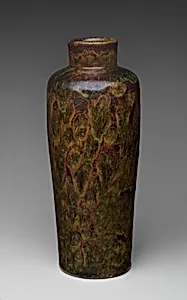
Flower Vase
Unknown Artist
late 18th century
Medium
Pottery covered with mottled glaze (Satsuma ware)
Dimensions
H. 9 1/4 in. (23.5 cm); W. 3 1/2 in. (8.9 cm); Diam. of rim: 2 in. (5.1 cm); Diam. of foot: 3 in. (7.6 cm)
Classification
Ceramics
Culture & Period
Japan · Edo period (1615–1868)
Department
Asian Art
Museum
Metropolitan Museum of Art, New York, NY
Credit
Edward C. Moore Collection, Bequest of Edward C. Moore, 1891
Accession Number
91.1.270
Rights
Public Domain
Art Historical Context
This exquisite Flower Vase, crafted in Japan during the late 18 century Edo period (1615–1868), exemplifies the refined artistry of Satsuma ware. Standing just 9¼ inches tall with a slender profile—3½ inches wide, a 2-inch rim diameter, 3-inch foot—this petite pottery vessel is adorned with a mottled glaze creates a textured, variegated surface of earthy tones. Housed in the Metropolitan Museum of Art's Asian Art Department as part of the Edward C. Moore Collection (bequest of 1891), it invites visitors to appreciate its subtle elegance. Satsuma ware originated from the Satsuma domain in southern Kyushu, where potters experimented with bold glazes during the Edo era—a time of relative peace that fostered innovation in ceramics for tea ceremonies, flower arranging (ikebana), and domestic display. The mottled glaze technique, achieved through layered applications of ash and minerals fired at high temperatures, produces an organic, irregular beauty reminiscent of nature's imperfections, aligning with Japanese aesthetics like wabi-sabi. Though by an unknown artist, this vase highlights the period's technical mastery and cultural role in everyday refinement, bridging utility and artistry in pre-industrial Japan. A quiet gem amid grander exports, it whispers of a vibrant ceramic tradition.