
Folding spoon
early 18th century
Medium
Nielloed steel with silver and gold inlays
Dimensions
Length: 7 1/2 in. (19.1 cm)
Classification
Metalwork-Silver In Combination
Culture
German, Frankfurt
Department
European Sculpture and Decorative Arts
Museum
Metropolitan Museum of Art, New York, NY
Credit
Gift of Mrs. Samuel P. Avery, 1897
Accession Number
97.2.125
Rights
Public Domain
Tags
About this artwork
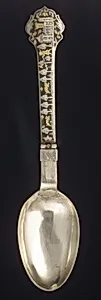
Johann Adam Boller, a German craftsman working in Frankfurt during the early 18th century (1700-1715), created this remarkable folding spoon combining nielloed steel with silver and gold inlays. Measuring 7½ inches long, the object exemplifies the sophisticated metalworking techniques and mechanical ingenuity prized by wealthy European collectors. Niello—a black mixture of copper, silver, and lead sulphides fused into engraved metal—creates dramatic contrast with the precious metal inlays, produ...
Art Historical Context
Crafted by Johann Adam Bol, a skilled Frankfurt metalworker active around 1700–1715, this folding spoon exemplifies early 18th-century ingenuity in decorative arts. Measuring just 7½ inches long, the nielloed steel piece with silver and gold inlays neatly for portability, blending everyday utility with mechanical virtuosity. Such implements were prized by Europe's elite, often forming part of elaborate portable dining sets or Kunstk collections—those wondrous cabinets of curiosities celebrating craftsmanship and rarity. The artistry shines in its techniques: niello, a black alloy of copper, silver, and lead sulphides fused into engraved steel, creates striking contrast against the shimmering precious metal inlays. Vivid motifs of animals, castles, men, and trees adorn its surface, showcasing Frankfurt's renown for precision and innovation. This fusion of function and ornament reflects Baroque-era tastes for opulent, technically complex objects that dazzled collectors. Gifted to the Metropolitan Museum of Art in 1897 by Mrs. Samuel P. Avery, the spoon captures Gilded Age American fascination with European metalwork. It invites us to appreciate how 300 years ago, a simple utensil could embody sophistication, skill, and the joy of discovery.