
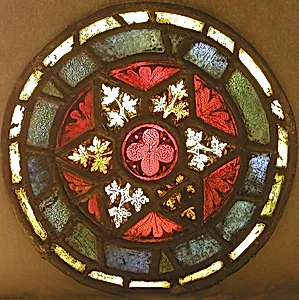
Foliate Medallion
Unknown Artist
ca. 1320
Medium
Stained Glass
Dimensions
Overall: 9 x 1/4 in. (22.9 x 0.7 cm)
Classification
Glass-Stained
Culture
French
Department
Medieval Art
Museum
Metropolitan Museum of Art, New York, NY
Credit
Rogers Fund, 1921
Accession Number
21.87.2
Rights
Public Domain
Tags
Art Historical Context
Nestled in the Medieval Art collection of the Metropolitan Museum of, the *Foliate Med* is a delicate stained glass roundel created in France around 1320. Measuring just 9 x 1/4 inches, this petite artwork exemplifies the exquisite craftsmanship of Gothic-era glassmakers. Its design features intricate leafy motifs, a common decorative element that evoked the beauty of nature amid the soaring cathedrals of medieval Europe. Stained glass like this was a pinnacle of medieval artistry, produced by embedding metallic oxides into molten glass for vibrant, jewel-like colors, then assembling pieces with lead cames and adding fine painted details fired in a kiln. These medallions often adorned the borders or tracery of grand church windows, filling spaces with organic patterns that symbolized growth, renewal, and divine abundance. Though the artist remains unknown, the work reflects the anonymous mastery of French workshops during the Rayonnant Gothic style, where light and ornament transformed sacred spaces into luminous spectacles. Acquired through the Rogers Fund in 1921, this fragile treasure offers visitors a glimpse into 14th-century devotion and ingenuity, reminding us how everyday motifs like leaves could illuminate spiritual worlds.