
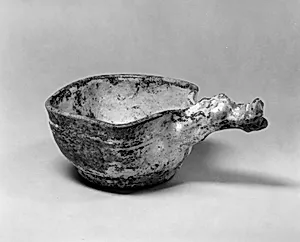
東漢 鉛綠釉陶魁|Food Container (Kui)
Unknown Artist
1st–2nd century
Medium
Earthenware with green lead glaze
Dimensions
H. 3 9/16 in. (9 cm); L. 8 1.2 in. (21.6 cm)
Classification
Tomb Pottery
Culture & Period
China · Eastern Han dynasty (25–220)
Department
Asian Art
Museum
Metropolitan Museum of Art, New York, NY
Credit
Charlotte C. and John C. Weber Collection, Gift of Charlotte C. and John C. Weber, 1994
Accession Number
1994.605.29
Rights
Public Domain
Art Historical Context
This delicate *Food Container (Kui hails from China's Eastern Han dynasty (25220 CE), a golden age of innovation and cultural flourishing. Crafted as tomb pottery, or *mingqi*, it was placed in burials to serve the deceased in the afterlife, Han beliefs in an eternal spiritual realm where everyday comforts continued. Standing just 3 9/16 inches high and 8 1/8 inches long, this earthenware vessel mimics ancient bronze ritual forms, ensuring the ancestor's rituals persisted beyond death. What sets this kui apart is its pioneering green lead glaze, a Han-era breakthrough that transformed pottery. By firing low-fired earthenware with lead oxide, artisans achieved a vibrant, glossy sheen—here a lush green evoking jade or patinated bronze. This technique not only enhanced durability and waterproofing but also democratized luxury aesthetics, making elite vessel designs accessible for funerary use. On view in the Metropolitan Museum of Art's Asian Art department, gifted by Charlotte C. and John C. Weber in 1994, this kui offers a window into Han ingenuity, blending utility, spirituality, and artistry in a single, timeless object.