
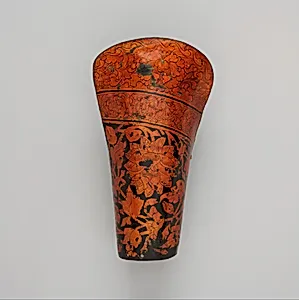
Forearm Guard for the Left Arm
Unknown Artist
possibly 15th–16th century
Medium
Leather, shellac, gold, pigment
Dimensions
L. 12 1/4 in. (31.1 cm)
Classification
Armor Parts
Culture
Tibetan or Mongolian
Department
Arms and Armor
Museum
Metropolitan Museum of Art, New York, NY
Credit
Purchase, Arthur Ochs Sulzberger Gift, 2005
Accession Number
2005.301.2
Rights
Public Domain
Tags
Art Historical Context
This exquisite Forearm Guard for the Left Arm, dating possibly to the 15th–16th century, hails from Tibetan or Mongolian culture and exemplifies the masterful fusion of utility and artistry in Central Asian arms and armor. Crafted for a warrior's left arm, this protective piece measures 12¼ inches (31.1 cm) in length and now graces the Metropolitan Museum of Art's Arms and Armor Department, acquired through the Arthur Ochs Sulzberger Gift in 2005. In an era of frequent horseback warfare across the steppes and highlands, such guards shielded vital limbs during combat while reflecting the wearer's status. Fashioned from sturdy leather coated in shellac—a natural resin for waterproofing and a glossy finish—the guard is richly decorated with gold and pigments. Delicate floral motifs, hinted at in its tags, bloom across its surface, showcasing intricate techniques that transformed functional armor into a canvas of beauty. These embellishments likely drew from Buddhist-influenced Tibetan aesthetics or nomadic Mongolian traditions, where nature-inspired designs symbolized resilience and harmony amid harsh environments. As a rare surviving armor part by an unknown artisan, it offers a window into the sophisticated craftsmanship of these cultures, blending defense with ornamental splendor. Visitors, imagine a rider deftly wielding a bow, forearm gleaming under the sun— a testament to artistry forged in the heat of battle.