
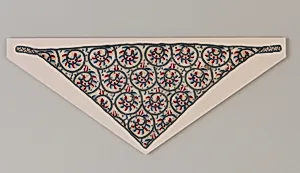
Forehead cloth
Unknown Artist
1600–1630
Medium
Linen worked with silk and metal thread, spangles; satin, long -and-short, braid, buttonhole, and couching stitches
Dimensions
Forehead cloth: H. 7 x W. 17 1/2 inches (17.8 x 44.5 cm)
Classification
Textiles-Embroidered
Culture
British
Department
European Sculpture and Decorative Arts
Museum
Metropolitan Museum of Art, New York, NY
Credit
Gift of Irwin Untermyer, 1964
Accession Number
64.101.1243
Rights
Public Domain
Art Historical Context
Step into the refined world of early 17th-century British fashion with this delicate *Forehead cloth*, crafted between 1600 and 1630. Worn by women as part of elaborate headdresses, these narrow bands adorned the forehead, framing the face beneath coifs or hats. Measuring just 7 by 17½ inches, this embroidered linen piece exemplifies the period's obsession with intricate personal adornment, reflecting the status and piety of its wearer in Jacobean England. The cloth's beauty lies in its masterful needlework: fine linen is embellished with shimmering silk and metal threads, accented by sparkling spangles. Artisans employed a repertoire of techniques—satin stitch for smooth surfaces, long-and-short for lifelike shading, braid and buttonhole for textured edges, and couching to secure metallic threads without piercing the fabric. Such methods, hallmarks of professional embroidery workshops, highlight the technical virtuosity of British textile arts during the Stuart era, where goldwork symbolized wealth and craftsmanship. Now housed in The Metropolitan Museum of Art's European Sculpture and Decorative Arts Department (gift of Irwin Untermyer, 1964), this anonymous treasure offers a tactile glimpse into everyday luxury, reminding us how embroidery bridged art, fashion, and social display in Renaissance England.